How to Use New Renaissance: A Guide to the Platform
A considered introduction to joining, discovering and participating in New Renaissance, from your first profile to the relationships that follow.
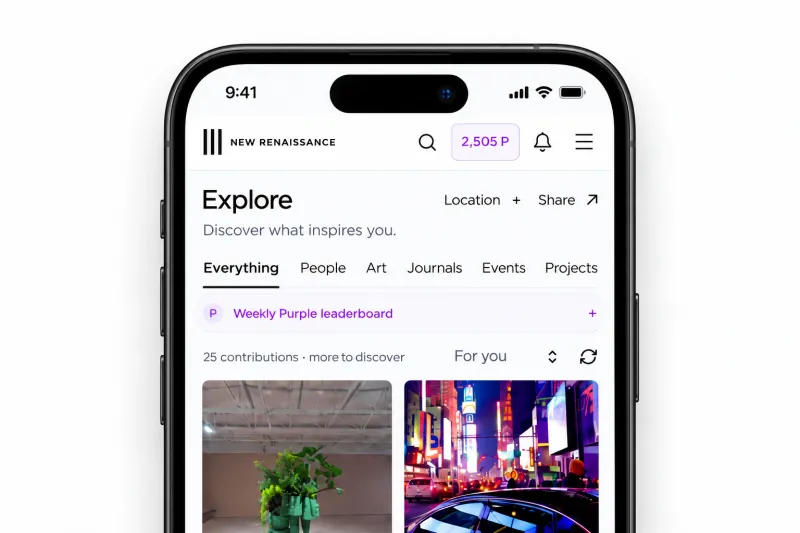
A useful cultural network gives you a way to move from an encounter to a relationship. You notice a painting, discover the person who made it, read about their process and find a reason to speak. New Renaissance brings those steps into the same place. The platform connects artists, collectors, patrons, curators, institutions and people whose interest in culture is still taking shape.
To use New Renaissance, join through a member’s referral or the public waitlist, complete your profile, explore work that interests you and begin contributing. Core participation is free. This guide explains the main parts of the experience and offers a practical way to make them useful. Platform instructions reflect the web experience reviewed on 15 October 2026.
1. Find your way in
Membership currently begins with a referral. If an existing member has invited you, open their actual invitation link and follow the registration steps. A link to the homepage is an introduction to the platform; it does not carry the same referral information. If you do not have an invitation, use the New Renaissance waitlist. Joining is for adults aged 18 and over.
Complete email verification when prompted. It connects your account to an address you control and is required for publishing. If the verification message is missing, check your spam folder and use the verification resend option. A waitlist submission and an active member account are different stages, so return through the invitation you receive when access becomes available.
During setup, add your name, a short introduction, a profile image, a cover image and a few creative interests. Begin with an honest account of where you are. A developed exhibition history is not a prerequisite for having something worthwhile to say. Collecting, looking, researching, making and supporting all provide different routes into cultural life.
2. Give people enough context to recognize you
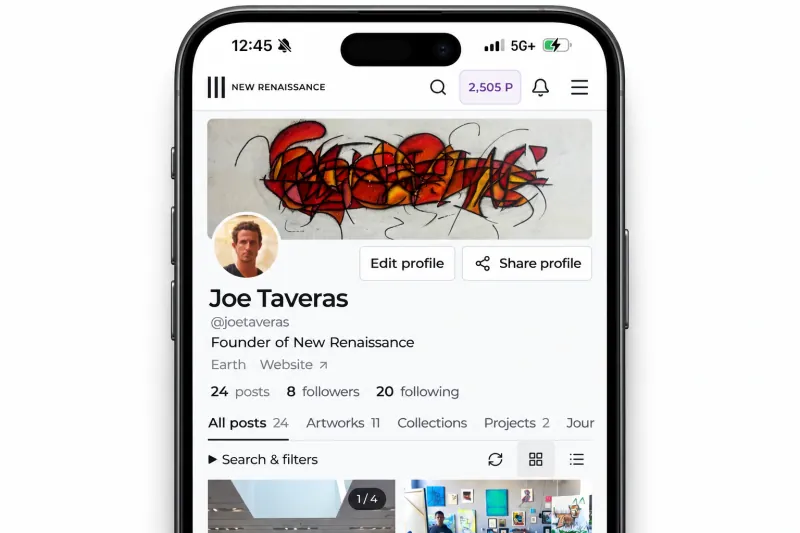
Your profile gathers the work and ideas you choose to share. Open your own profile and select Edit profile, or visit Profile & settings. A clear portrait, a descriptive headline and a short account of your interests make the next interaction easier. Someone should be able to understand what you do and why a conversation with you might be relevant.
Think of the profile as a continuing introduction. An artist can connect finished works with studio notes. A collector can describe the questions guiding a collection. A curator can set out a research interest or a project in development. You do not need to fill every section immediately. Begin with accurate essentials, then add work that gives those words substance. The companion guide, How to Make a Good Profile on New Renaissance, develops this process in detail.
3. Use discovery with a question in mind
Start with Explore when you want to encounter work and people across the community. Visit the Feed to spend time with posts and conversations. Following helps you return to people whose work interests you; Popular offers another view of activity. These are different ways into the community. No single view is a complete measure of artistic merit.
A productive browsing session can begin with a question: who is working with textiles? Which projects involve public space? What are artists in a particular place discussing? Open a contribution, read its context, then visit the person behind it. Save work you want to revisit. Following a practice over time often reveals something that a single image cannot: the questions that persist and the decisions that change.
Sociologist Mark Granovetter’s 1973 study of weak ties examined how connections between social circles can carry information and opportunity. That research was not a study of New Renaissance, and it does not predict any individual member’s results. It offers a useful lens for participation: an unfamiliar perspective can matter precisely because it comes from beyond the people you already know.
Our practical suggestion is to balance recognition with discovery. Follow people whose work already speaks to you, then spend some time outside that circle. Read a medium you do not practice. Consider an institution’s question from an artist’s perspective. Let your interests develop through encounters instead of treating your initial choices as fixed boundaries.
4. Make a first contribution with a clear purpose
Open Create and choose the form that fits what you want to share. An everyday Post can introduce a thought or a work in progress. Artwork gives an individual work its own context. Project is useful for an undertaking that has stages, needs and a next milestone. Journal gives longer writing room to develop. Opportunities, events and collections serve more specific purposes.
For a first post, choose one thing you can explain well. A photograph of a work with its title and the question behind it is enough. So is a short reflection on an exhibition, with the artist and venue credited. A collector might describe a material they are learning to look at. An institution might introduce a programme and explain who it is for.
Before publishing, use Preview and read the contribution as a person encountering you for the first time. Does the image have context? Are names and dates correct? Is it clear what you are sharing and whether you welcome a response? The posting guide explains formats, image descriptions, drafts and audience choices.
5. Build a conversation from something specific
A useful comment gives attention a visible form. Describe the material decision you noticed, ask how a project developed, or connect the work to a relevant reference. Specificity gives the maker something they can answer. Praise has its place, but a thoughtful question often opens a more substantial exchange.
When you send a message, introduce the reason for contacting that person. Explain what you saw, what interested you and what you are asking. Keep the request proportionate to the relationship. A question about process calls for a different introduction from a commission or an institutional proposal. Respect a member’s messaging preferences and allow time for a response.
New Renaissance may show a Purple cost before opening a conversation. Read that prompt before confirming; the conversation interface explains the applicable charge and free replies. You can also begin through a relevant public comment within the audience of a post. The quality of an exchange depends on the care brought to it.
6. Understand Purple and invitations
Purple is New Renaissance’s platform credit. It recognizes eligible participation and can be used in supported interactions and features. It has no cash value. Your Purple page shows your balance and the current ways to earn or use it. Read the amount and any conditions presented before confirming an action.
Members receive five invitations per calendar month. When an invited person joins and verifies their email, both people receive 100 Purple under the current referral rules. Share your invitation with someone you would like to see participate, and explain why you thought of them. The invitation card shows remaining invitations and the reset date. Those live details are the best reference for your account.
A reward can acknowledge a contribution, but it cannot supply its meaning. Share a work because it adds something to the conversation; invite a person because their presence could enrich it. A network becomes useful when members have reasons to return beyond the act of collecting a reward.
7. Choose what you make visible
Profile visibility and post audience are separate choices. A members-only profile is for the signed-in community. A private account adds follower approval. A public profile can be read without signing in and may appear in search engines. Making a profile public does not automatically publish every post to the open web.
Each contribution has its own audience selector. Review it before publishing, particularly when sharing work in progress, an unpublished proposal or someone else’s information. Public posting requires an eligible public profile and an explicit public audience choice. Changing a setting later does not guarantee that a search engine will immediately remove a previous result. Settings explains the choices available to you.
A useful rhythm for your first week
- Begin with a legible profile. Add a recognizable image, a concise introduction and your current interests.
- Publish one considered contribution. Give it a clear title, useful context and the audience you intend.
- Follow a few practices. Choose people you want to learn from, including someone outside your usual field.
- Offer a thoughtful response. Return to a work that stayed with you and explain what you noticed.
- Revisit your introduction. Use what you have learned to make your profile more precise.
These are editorial suggestions, not platform requirements or a formula for reach. The aim is to establish a rhythm you can sustain. A useful first week might produce a conversation, a new reference or a clearer understanding of your own work. Each is a reasonable beginning.
To understand the thinking behind the platform, read The New Renaissance Story. To begin participating, sign in or join the waitlist.
Sources and further reading
Platform reference: New Renaissance’s current web profile, publishing, privacy, invitation and Purple controls, reviewed 15 October 2026. The practical recommendations are New Renaissance’s editorial interpretation, not findings from the cited study.
 Using New Renaissance · 9 min read