Posting on New Renaissance: A Guide to Sharing Your Work
How to choose the right format, give creative work its context and publish with enough care that someone else can understand what they are seeing.
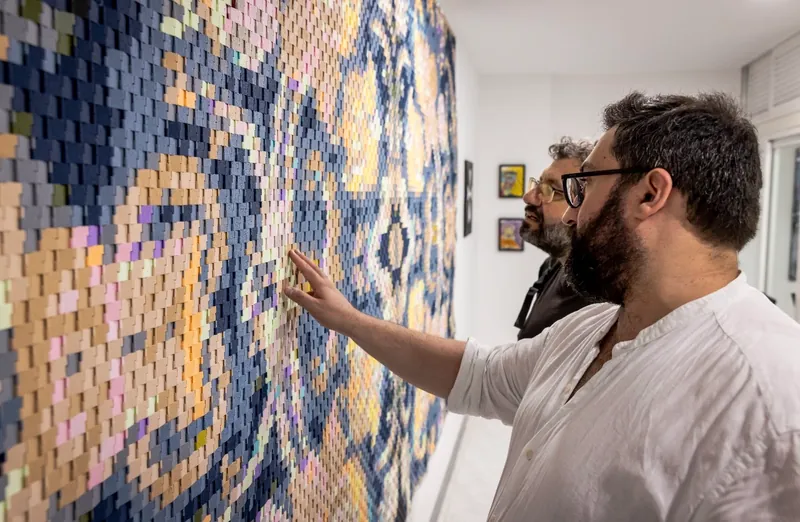
A post creates a meeting between a work and someone who was not there when it was made. The viewer cannot recover the studio conversation, the scale of the object or the decisions behind an image unless you give them a way in. Good publishing supplies enough context for an encounter to become meaningful.
On New Renaissance, begin at Create, select the appropriate content type, add your text and media, choose an audience and use Preview before publishing. The platform supports everyday posts, artwork pages, projects, collections, opportunities, events and journal entries. This guide explains how to use those forms with editorial care. Instructions reflect the web experience reviewed on 15 October 2026.
Choose the form that matches the contribution
Post: an observation, an update or a work in progress
Use an everyday Post for a studio moment, a question, a photograph or a short reflection. It can be provisional without being vague. Explain what the reader is seeing and why you are sharing it now. A test piece becomes more interesting when its maker identifies the decision they are testing.
Artwork: a work with its own identity
Choose Artwork when the object or work should have a dedicated page and appear in your profile’s Artworks section. Add the title and a concise description, then include the relevant materials, year and dimensions. Review the availability field: Available and Collected communicate different things. Leave availability unspecified when you cannot make a clear statement.
Project: work unfolding over time
A Project gives an ongoing undertaking its own page. Explain the purpose and current stage, identify the next milestone and say what help is needed. Progress updates can extend the project’s record as it develops. A visitor should be able to distinguish an early idea from work in production or a completed outcome.
Collection: a group with a reason to belong together
Use Collection to bring selected works into a considered relationship. State the organizing idea: a material, a place, an artist, a research question or another connection. Clarify your relationship to the works and credit their makers. A curated selection does not in itself establish ownership; describe that relationship accurately.
Opportunity: an invitation someone can evaluate
An Opportunity should explain who can participate, what is being offered, what is required and how to apply. Include the deadline and relevant location, along with any known fees or compensation. Distinguish a confirmed invitation from an exploratory call. The reader should have enough information to decide whether taking the next step is worthwhile.
Event: something with a time and a place
For an exhibition, gathering or discussion, choose Event. Give the venue or online setting, date, time and access details. If the audience is international, state the time zone in the text. Add the booking or information link and explain whether attendance requires registration. Review the details again if the event changes.
Journal: an idea that needs room
Choose Journal for an essay, interview, research note or sustained reflection. Entries appear in your profile’s Journal and the member Archive for the audience you select. A member journal entry does not automatically become an article in the company’s public editorial Journal. The publishing screen currently allows up to 30,000 characters for Journal writing and 5,000 for other post text.
Give the reader the facts before asking for interpretation
For an artwork, a useful opening identifies the maker, title, year, medium and dimensions when those details apply. Getty’s Categories for the Description of Works of Art treats such information as part of the core description of cultural objects. A social post is not a museum catalogue, but it benefits from the same discipline: reliable identification makes interpretation possible.
Write dimensions with a clear order and unit. For a two-dimensional work, specify height × width; include depth where relevant. Identify a detail photograph as a detail, and a digital installation proposal as a proposal. An image of a framed work should not leave the viewer guessing whether the measurement includes the frame. Explain the particular case rather than relying on an assumed convention.
Then describe a decision. What did you change? What did the material allow? What remained unresolved? A sentence about a scraped surface, a repeated walk or a repaired joint gives a reader something concrete to notice. Interpretation can grow from that evidence. You do not need to announce what every viewer must feel.
For example, an invented caption might read: “Harbor Study, 2026. Acrylic and graphite on paper, 42 × 29.7 cm (height × width). I kept the first pencil marks visible after adding color because they preserve the rhythm of the initial drawing. This is one of six studies made after repeated walks along the waterfront.” The facts establish the work; the process gives the reader a way to look.
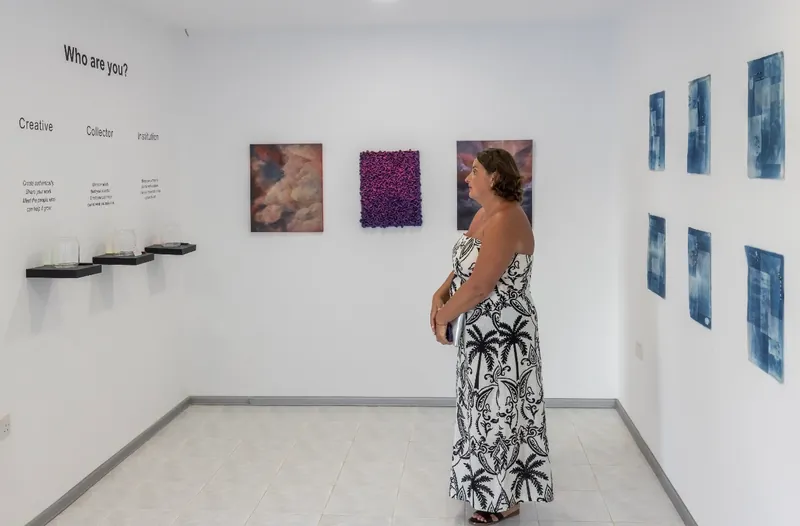
Edit the images as a sequence
The current composer accepts up to five images or videos in a post. The first item acts as the cover. Put the image that best introduces the contribution first, then use later items to add information. For a painting, that might mean a full view, a surface detail, a view in a room and a process image. Each image should earn its place by showing something the others do not.
Photograph flat work as squarely as possible, with even light and enough resolution to see the surface. Keep color adjustments faithful to the object. A dramatically altered image can produce an expectation the actual work will not meet. For sculpture or installation, show more than one angle when a single view cannot explain the form.
For a video, make the beginning intelligible and explain the subject in the accompanying text. If spoken words carry information, provide a transcript or a concise written account in the post; do not assume automatic captions are available. Watch the upload finish and review the result. A visible placeholder or an unfinished progress indicator is not evidence that the media is ready.
Write image descriptions that help someone see
Each media item has an Alt text field. Describe the relevant visual information clearly. The W3C’s guidance on informative images emphasizes describing the information an image conveys in its context. For art, that may include composition, material, color, arrangement and a significant detail. A caption can discuss authorship and process while alt text explains what is visibly present.
A useful description might be: “Vertical painting with three orange forms crossing a pale blue field; thin graphite lines remain visible around their edges.” If the photograph shows an installation, describe the work’s relationship to the room. Avoid a string of promotional terms or hashtags. Image descriptions serve readers first.
Credit is a separate responsibility. Name the artist and photographer where applicable, and identify the source of archival material. Share images you have permission to publish. If a collaborator contributed substantially to a project, explain their role. The person receiving credit should be identifiable from the text, not hidden in an unexplained tag.
Give longer writing an argument and a shape
A strong journal entry begins with a question worth following. Introduce the situation, develop the observations or evidence, and show how your thinking changes. Section headings help a reader understand the route through the piece. In the current editor, separate paragraphs with a blank line and begin a section heading with ## followed by a space.
When discussing another person’s ideas, identify the source near the claim. Separate a documented fact from your interpretation. If you conduct an interview, make the speaker and context clear and check any quotation before publication. A reference list is useful, but it should accompany careful reasoning throughout the text.
Choose a title that identifies the subject. “Notes on Repair in Contemporary Sculpture” gives more direction than “Some Thoughts.” The opening paragraph should make clear what the reader will learn or consider. An academic sensibility comes from precision, evidence and the willingness to examine an idea, not from making every sentence difficult.
Treat draft saving and publishing as separate steps
The composer’s draft controls save text on the current device when enabled. Drafts are restorable for seven days, and photos and videos must be added again. Signing out removes saved drafts. Keep a separate copy of substantial writing, particularly before changing devices or clearing browser data. A locally saved draft has not been published to the network.
Use Preview to inspect the current contribution. Check the title, image order, spelling, links and any dates. For an artwork, verify materials and dimensions. For an opportunity, check what the applicant is being asked to provide. Return to editing when something is unclear, and wait for uploads to finish before publishing.
Make the audience a deliberate editorial choice
The audience selector distinguishes Members, Friends and Only me, with Public available when your account is eligible. Friends means mutual follows. Private accounts use approved-follower access for their member audience. The explanation beside the publish controls describes who will be able to view the contribution.
A public post requires a public profile and the public audience choice. Turning on public profile visibility does not change the audience of existing work. This distinction matters when you use the same account for work you want found on Google and conversations intended for a smaller circle. Review the audience on the individual item every time.
For public discovery, write a descriptive title, identify the work accurately and give the page substantive original text. Avoid repeating search terms unnaturally. Public visibility allows the page to be considered for search indexing; Google decides whether and when to index it. Members-only and friends-only content should be chosen for the relationships they serve, without an expectation of public search visibility.
Give the contribution a life after publication
Open the published page and verify that the work appears as intended. Respond to relevant questions, correct mistakes and update information that changes. If a project reaches a milestone, publish an update that explains the development. If an opportunity closes, revise it so a later reader does not mistake it for a current invitation.
There is no universal posting frequency that makes a practice meaningful. A considered rhythm might alternate a finished work, a process observation and a longer reflection. Let each contribution add a different kind of understanding. Over time, the accumulated record should help someone see what you are doing and how your thinking develops.
Prepare the context around your posts with the profile guide, return to the platform guide, or explore The New Renaissance Story.
Sources and further reading
- Getty Vocabulary Program, Categories for the Description of Works of Art: Overview of Categories.
- W3C Web Accessibility Initiative, “Informative Images.”
Publishing controls, character limits, media capacity and draft behavior reviewed 15 October 2026. The caption and alt text examples are fictional. Recommendations on documentation and editorial structure are New Renaissance’s application of the cited guidance.
 Using New Renaissance · 8 min read
 Using New Renaissance · 9 min read